


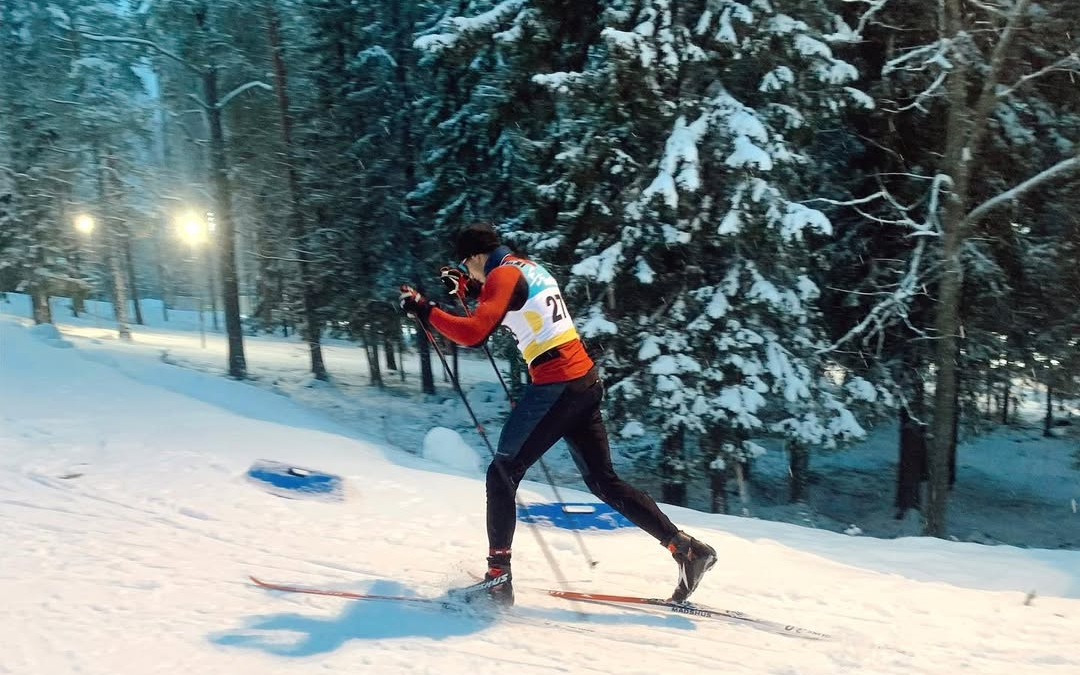
Saudi Arabia’s sports story is expanding into places most people never imagined: forests, frozen tracks, and start gates far from home. When the Winter Olympics opened in Milan, the Saudi flag entered that arena carried by Rakan Alireza, a cross-country skier who built his path with endurance, hard pivots, and a full-time job waiting back in Jeddah.
This is what makes him relevant right now. Not only the Olympic moment, but the way he got there, and what that mindset can unlock for the next wave of Saudi athletes and sports operators.
The Man Before the Snow
Rakan wasn’t always an athlete. As a child, he was overweight and had little interest in sports. The shift came much later, after university, when he moved to Riyadh. There, the gym became more than a place to exercise. It gave him structure, helped him build a community, and connected him with people who pushed him to grow.
This context changes how you see his story. He wasn’t raised around winter sports or trained from a young age. He’s a late bloomer, someone who first rebuilt himself, and then began pushing the boundaries of what he could do.
He’s equally honest about his relationship with work. A traditional 9-to-5 never felt complete. He was driven by goals, progress, and measurable improvement. Training gave him what routine work couldn’t: a clear sense of direction and daily growth.
“They wanted me to focus strictly on one (rowing or skiing). But I didn’t believe that was my way. I’d rather fail my way than succeed someone else’s way.”
CrossFit: The First Proof He Could Change Fast
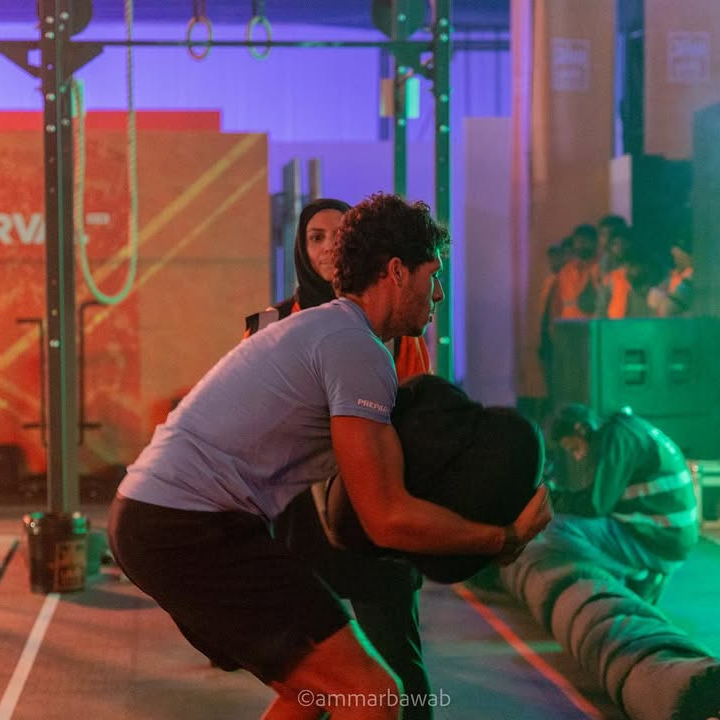
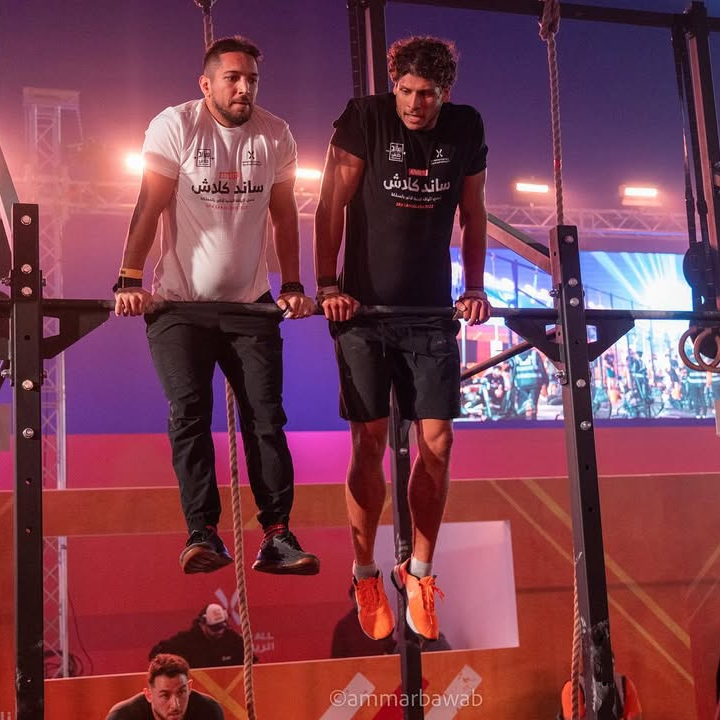
Rakan’s first real competitive breakthrough came through CrossFit. He entered competitions without overthinking or waiting to feel “ready”. He showed up, learned through experience, and improved quickly. Within months, he moved from being just another participant to ranking among Saudi competitors. CrossFit gave him more than physical strength. It revealed a pattern he would later rely on again:
- Commit before you feel fully prepared.
- Learn in public, not in isolation.
- Keep moving forward, even when you’re behind.
That mindset became the foundation for everything that followed, including his journey into winter sports.
Rowing: Where He Learned Pain, Pacing, and Pressure
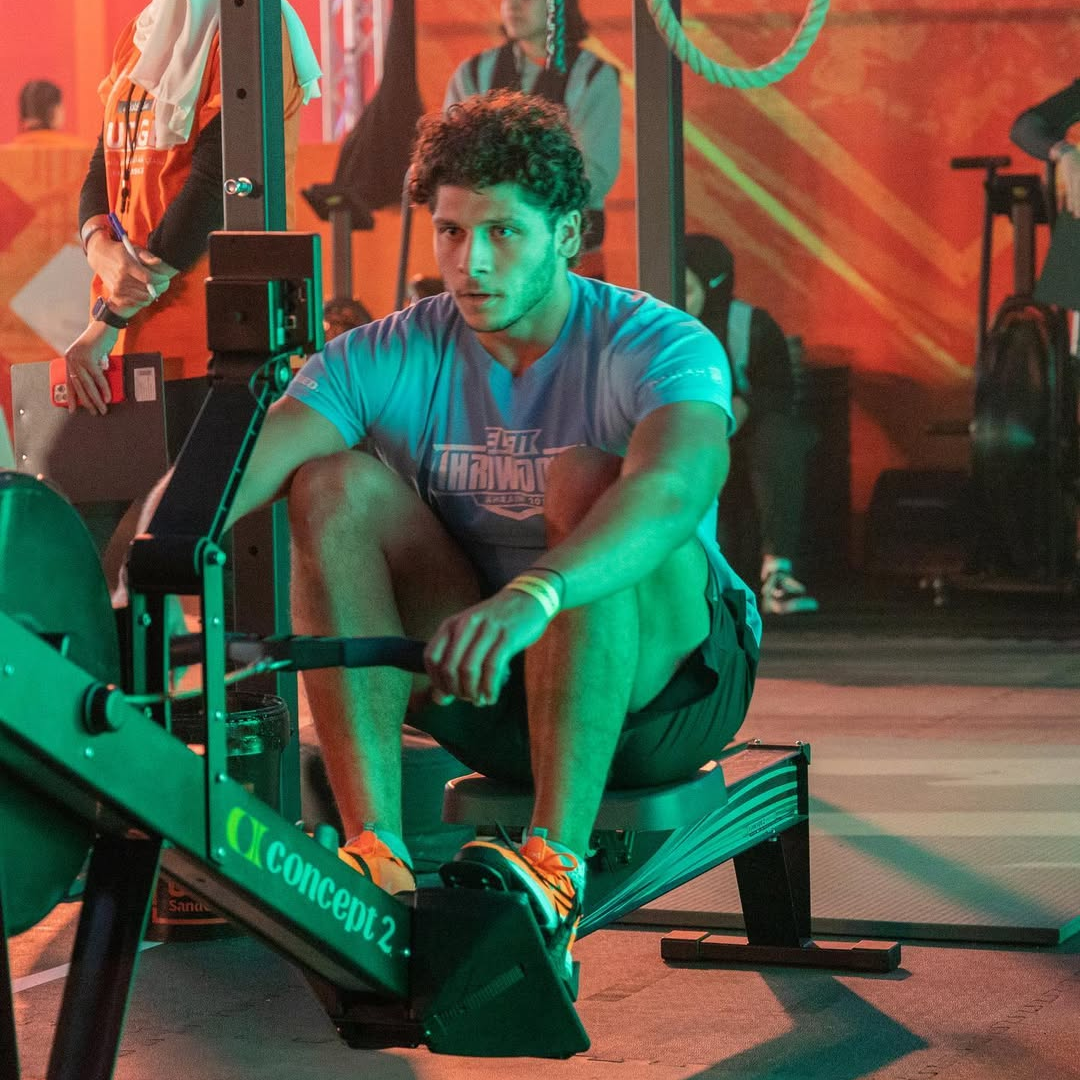
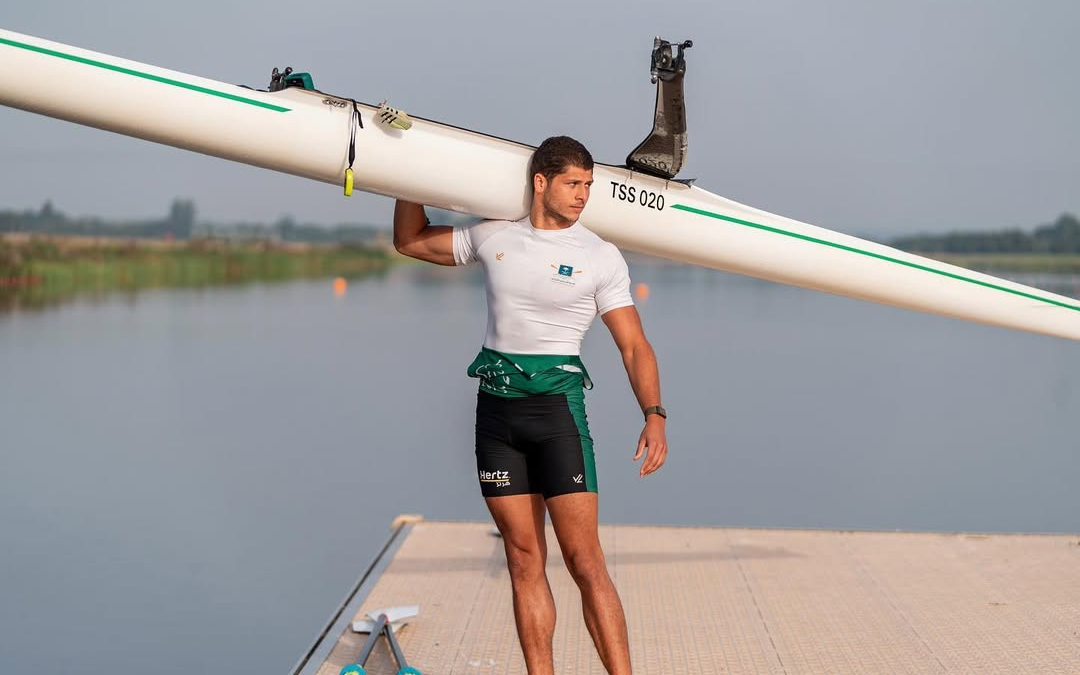
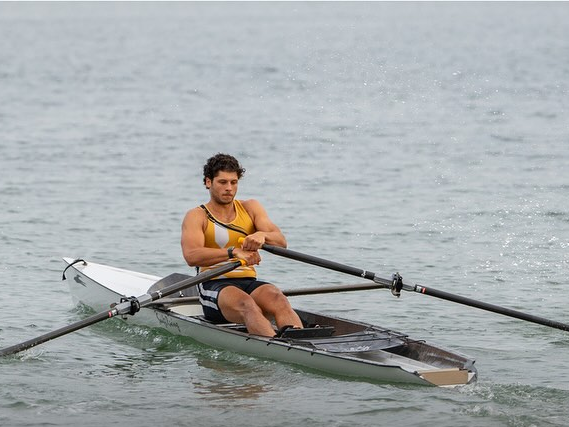
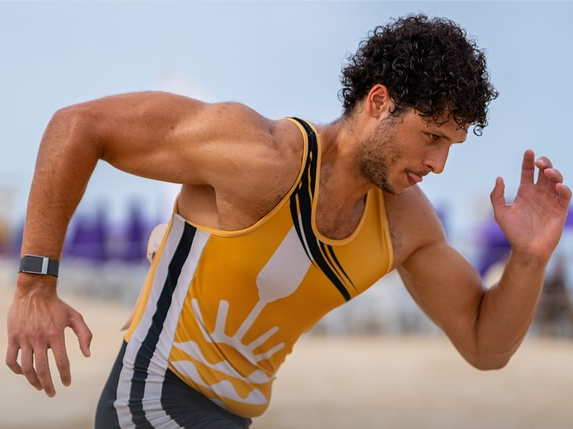
Rowing entered Rakan’s life the same way many of his turning points did: through a challenge. He was in London when he saw Saudi rower Hussain Alireza using an indoor rowing machine. At first, it looked straightforward. Then he learned about the 2,000-meter test, a benchmark known for its intensity. Curious, he tried it himself. The result surprised him. For the first time, he saw the possibility of becoming something new.
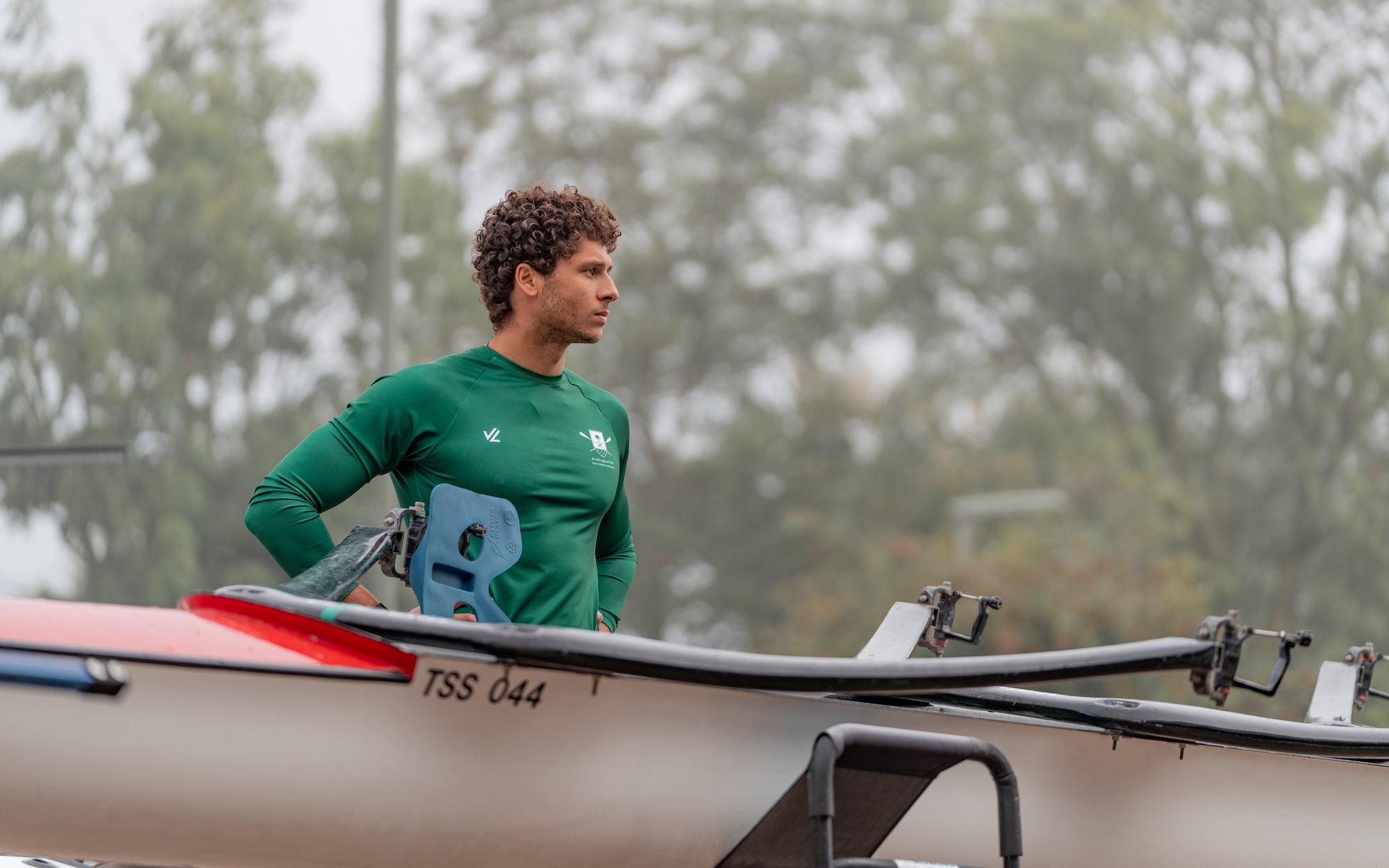
What happened next reflects his mindset. With minimal preparation, limited knowledge of formal rules, and no full training system behind him, he went on to represent Saudi Arabia in indoor rowing. His preparation was unconventional. His warm-up was simple - coffee and a run. His coaching happened remotely, over FaceTime. And despite all of that, he says he won.
This moment reveals something deeper than a single result. He didn’t treat his comfort zone as a boundary. He treated it as optional. Rowing also gave him a critical physical foundation. It built his endurance, discipline, and pacing under pressure. That aerobic engine would later become essential, especially in cross-country skiing, one of the most physically demanding endurance sports in the world.
“When people say I’m ambitious, I say I’m just following the lead. Our leadership, King Salman and Crown Prince Mohammed bin Salman, are ambitious. The country is ambitious. It’s a duty for us to contribute.”
The Call That Changed Everything
The shift toward winter sports began with a simple question from a cousin: Do you want the chance to qualify for the Winter Olympics? Rakan said yes immediately, then asked what sport it would be. It was cross-country skiing.
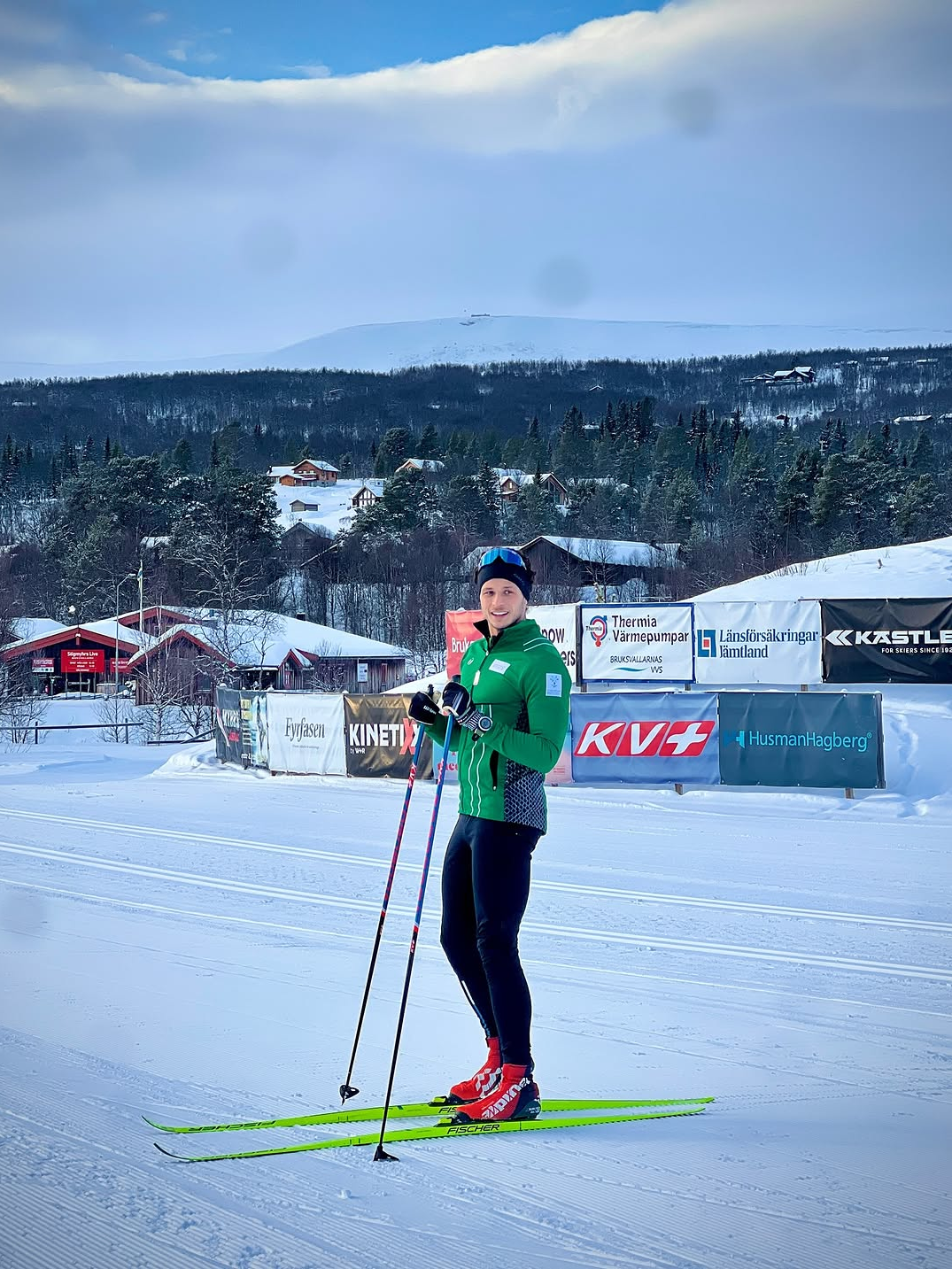
At the start, he didn’t even fully know what cross-country skiing was. He thought: I’m fit. I can ski. How hard can it be? Then the reality hit. He describes the first day: narrow skis, repeated falls, and the kind of technique gap that fitness cannot hide. They trained on an indoor loop of about 1.3 km. Short, repetitive, and brutally honest. The comments from others were constant: You’re from the desert. You think you’ll qualify in four months?
This is where his story becomes bigger than sport. Because that moment, being underestimated while you learn something new, is the exact moment most people quit.
Training Like a Builder
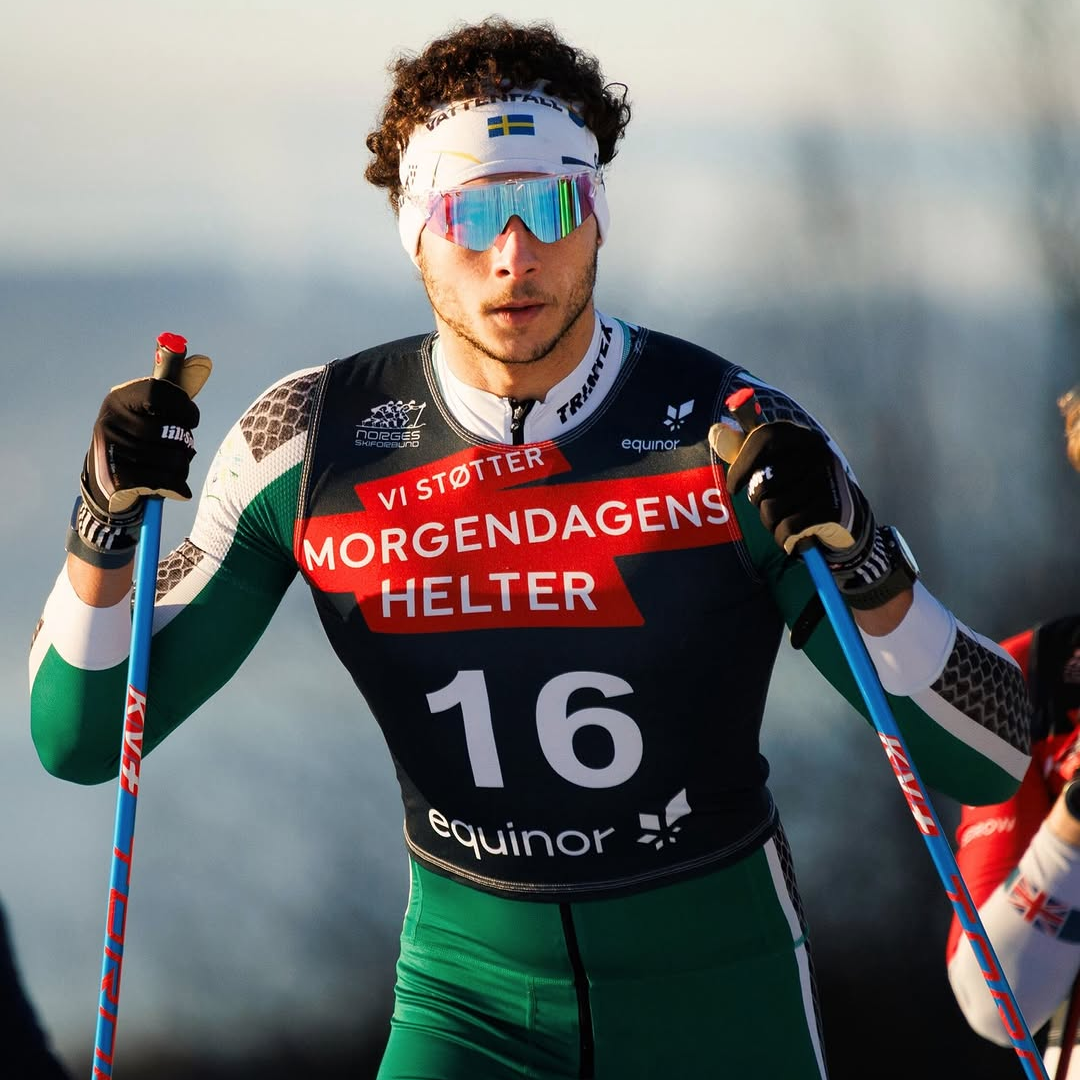
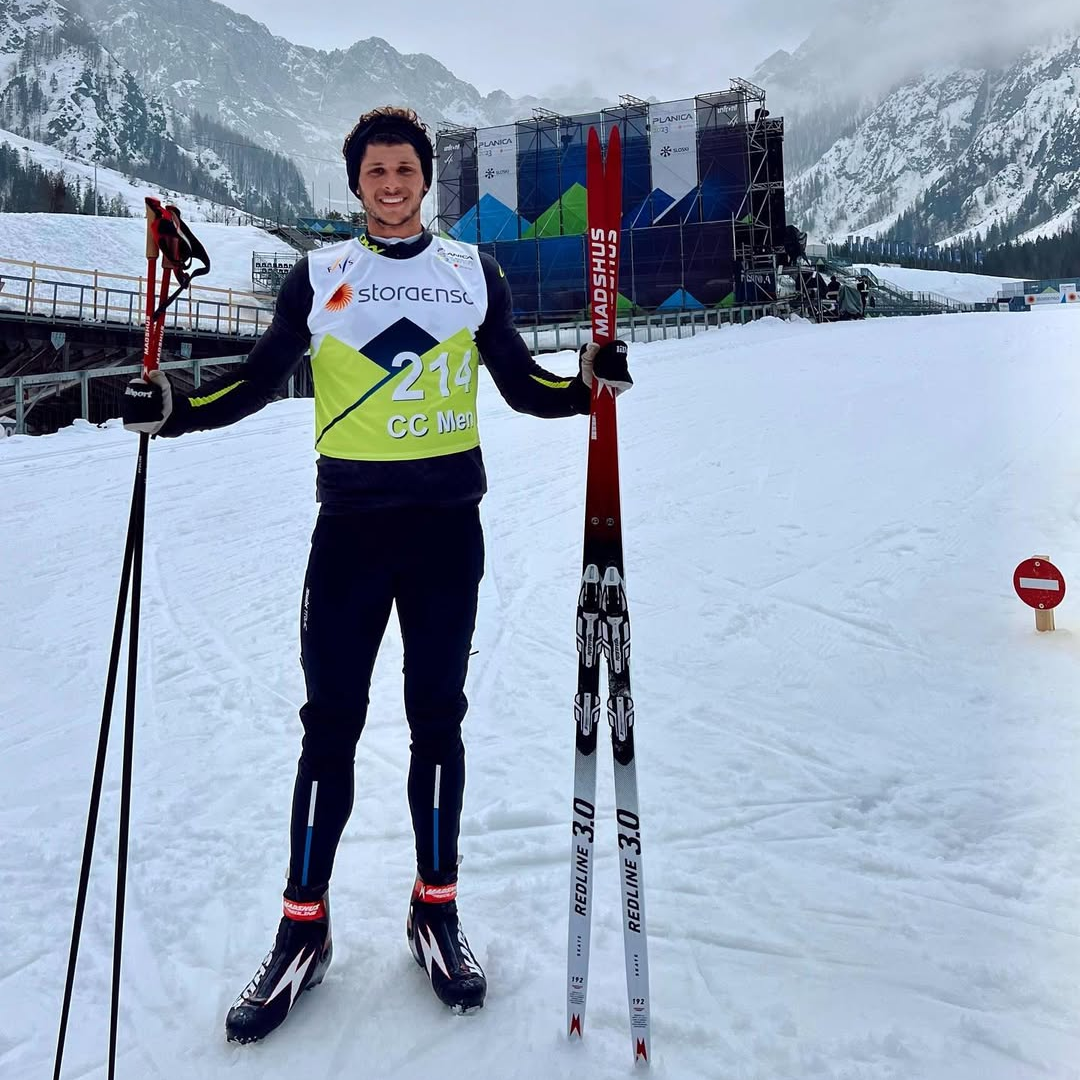
Rakan approached training like construction: deliberate, repetitive, and built to last. His coach prioritized endurance early on, with hours of running, long cardio blocks, and sessions that eventually scaled to nearly four hours a day. In Saudi Arabia, the lack of consistent snow forced him to adapt, building his base through running, cycling, and roller-ski simulations while navigating real-world risks like traffic and unsafe roads.
From 2021 to 2025, he estimates he had been on actual skis only about 150 times, an amount many winter athletes accumulate in a single year. He didn’t treat that as a disadvantage. He treated it as reality, and built progress from what was available.
Milano Cortina: The Moment Saudi Saw Him
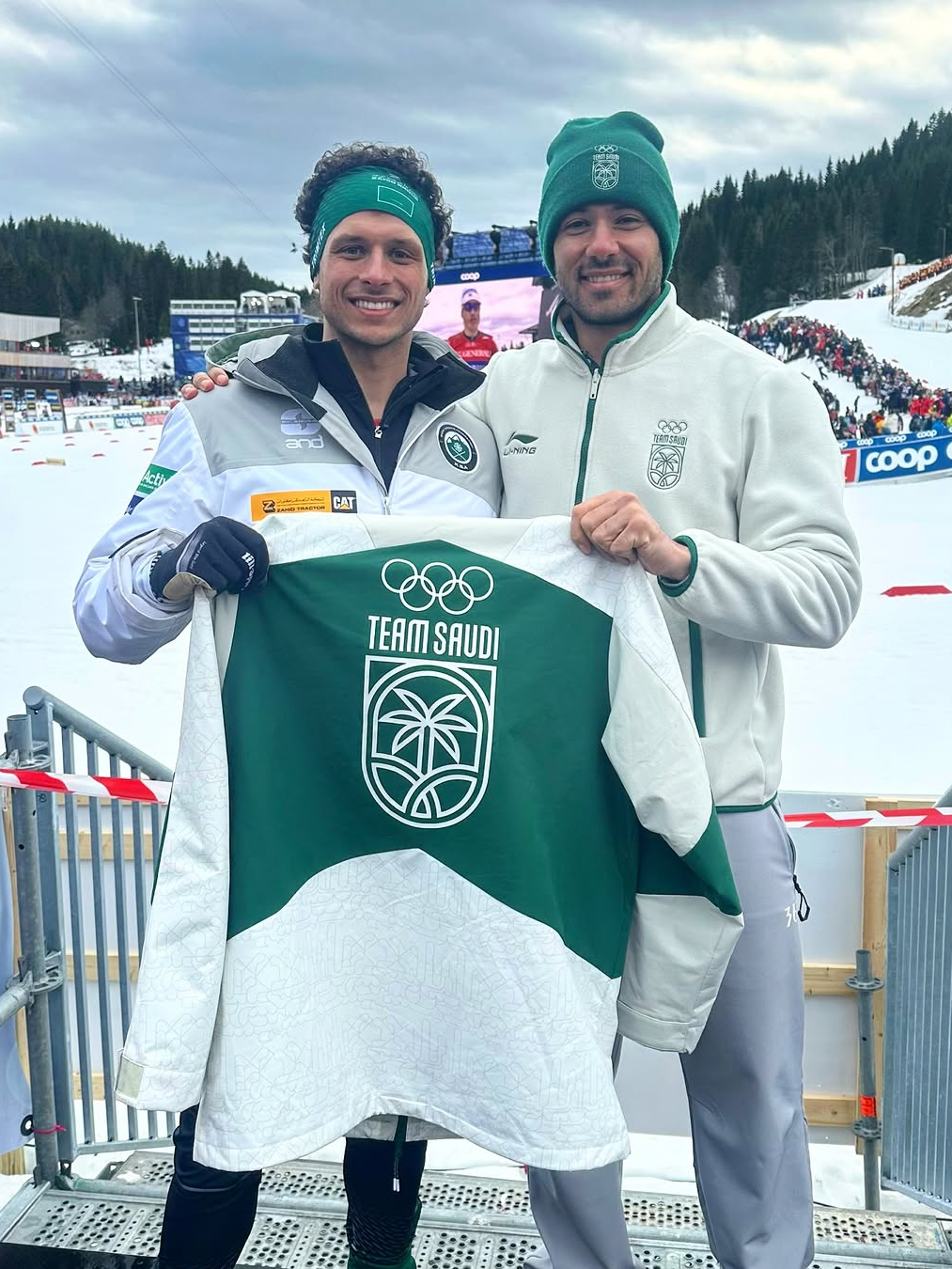
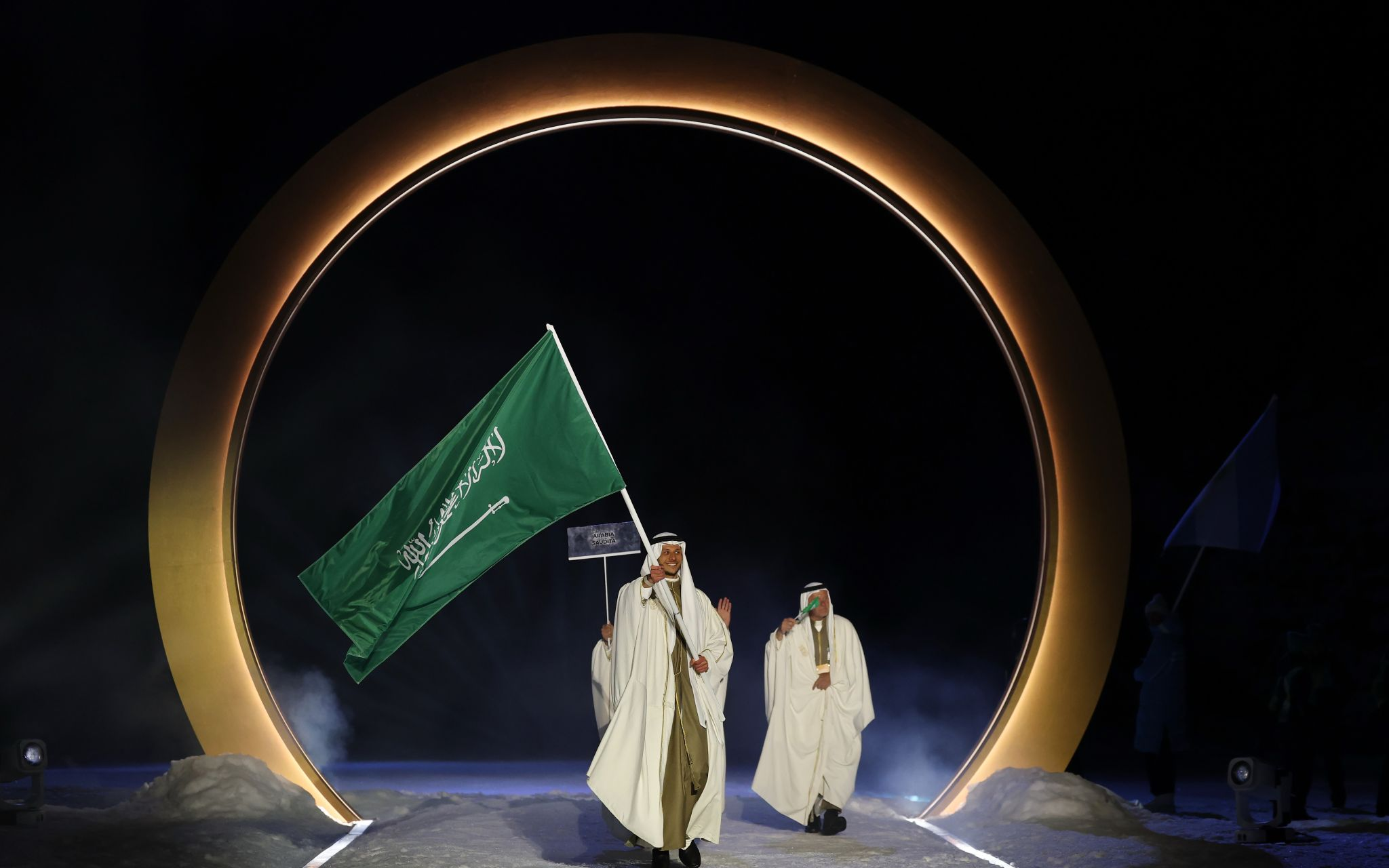
On opening night in Milan, the Saudi flag entered the Olympic ceremony carried by Rakan Alireza, arriving in a Team Saudi look designed by Saudi designer Alya Al-Salmi, built to carry Saudi identity into a global arena. Not as a symbol for the moment, but as a message for everyone back home who needed proof that winter sport can carry a Saudi name. He carried it for the Kingdom, for his family who watched the journey up close, and for the next generation that will grow up believing “impossible” is simply a starting point.
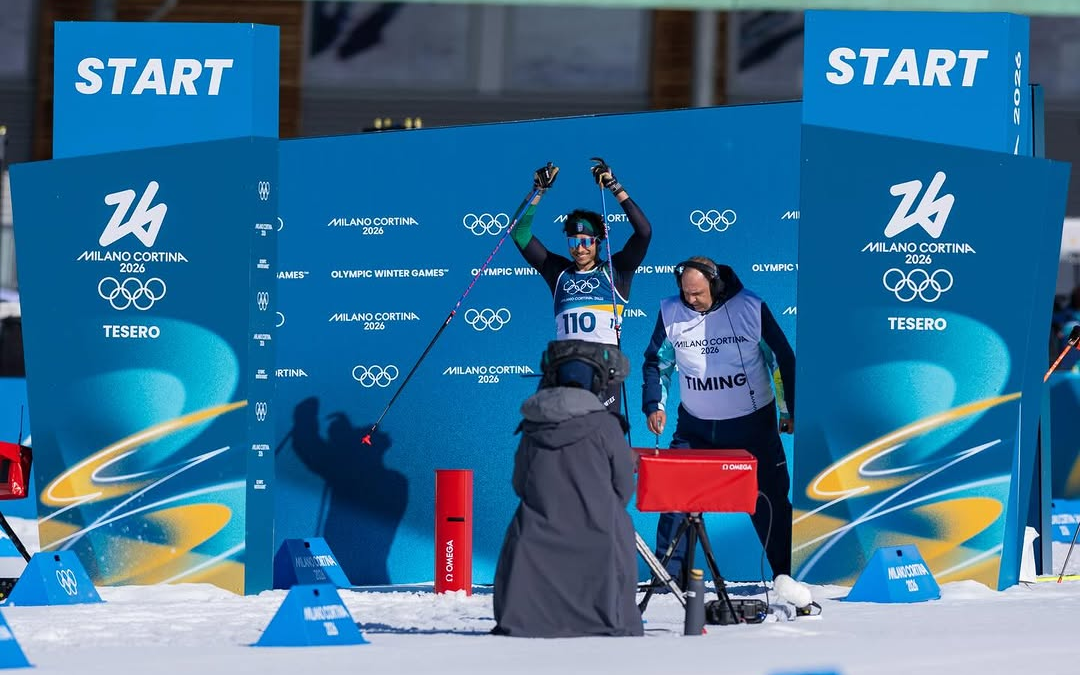
A week later, he stepped onto the course in the Men’s 10km Interval Start Free and finished in 31:04.0. For some countries, that start line is routine. For Saudi Arabia, it was a public proof point: a Saudi cross-country skier can enter a discipline built on snow, tradition, and deep infrastructure, and still show up on the world’s biggest stage.
“My goal is bigger than finishing… I want to open doors for the next generation of Saudis.”
The Workday Side of the Story: Kona and the Sports Economy
What makes Rakan especially relevant for Saudi’s sports economy is that he isn’t only competing abroad. He’s also working locally, inside participation-based sports. He describes himself as working full-time and serving as Business Development Manager at KONA Jeddah Marine Sports Club, Saudi Arabia’s first wakeboarding facility. That combination of elite athlete + sports operator, is a modern Saudi profile:
- Represent the Kingdom internationally,
- Build the local market domestically,
- Turn sport into jobs, experiences, and community.
This is exactly how sports becomes an economy, not only entertainment.
Competitive Highlights
- Opening-ceremony flag bearer for Saudi Arabia at the Milano Cortina 2026 Winter Olympics
- First Saudi to compete in Olympic cross-country skiing (Milano Cortina 2026)
- Olympic competitor: Men’s 10km interval start free (Milano Cortina 2026)
- FIS Nordic World Ski Championships competitor (Planica 2023; Trondheim 2025)
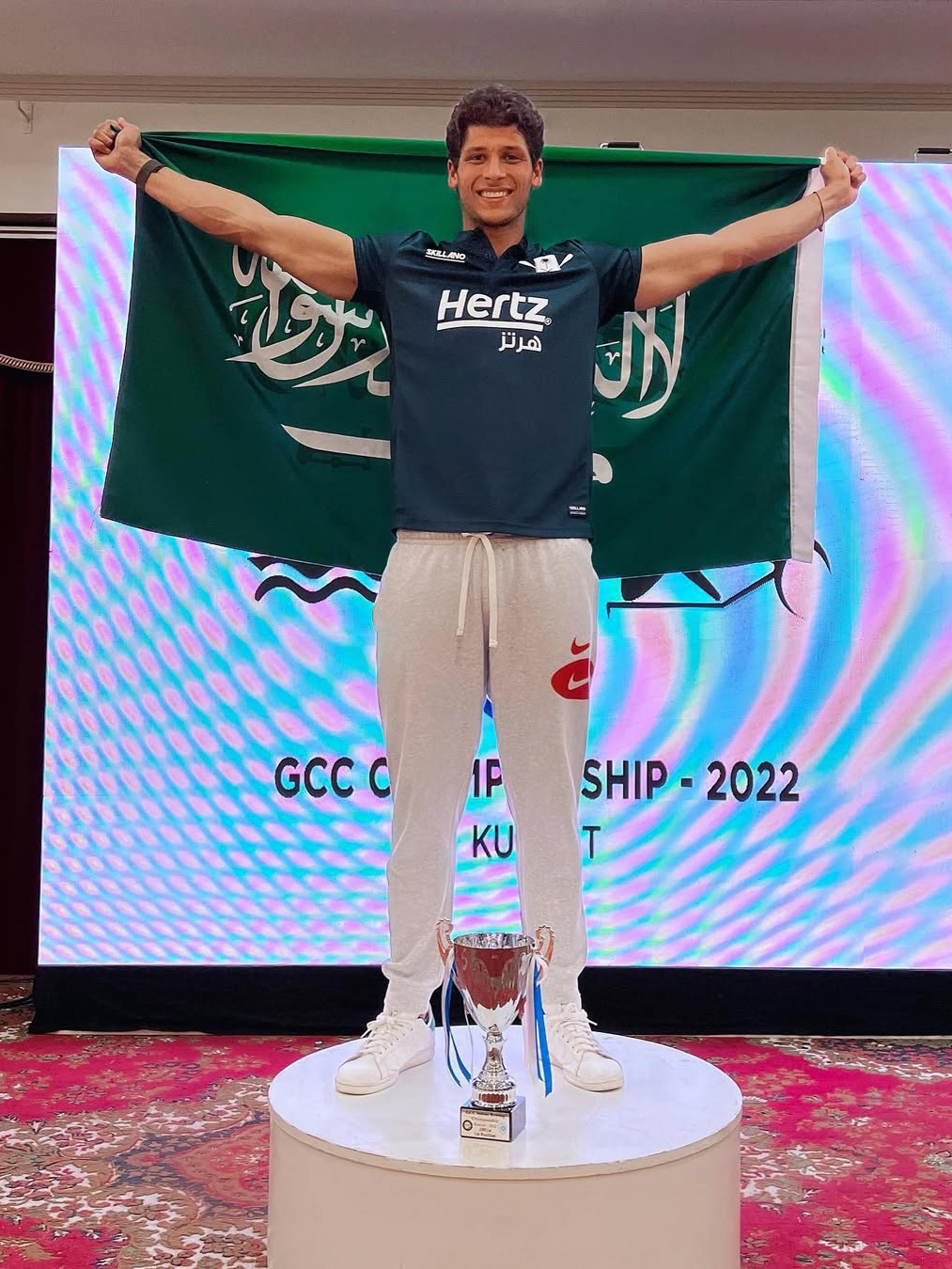
- GCC Indoor Rowing champion (2000m) — 2019 & 2022
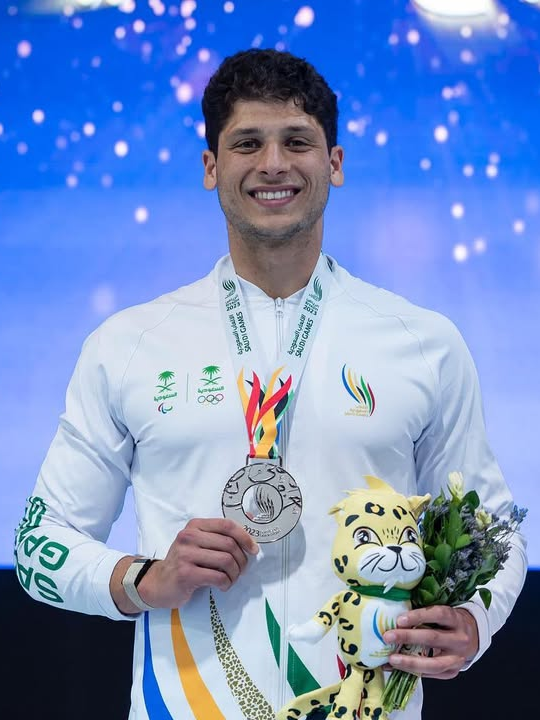
- Saudi Games rowing gold medalist — 2024
Vision 2030 Context: Winter Sport, Rewritten
In many ways, Rakan isn’t an exception. He’s an early example of what Vision 2030 was designed to make possible:
- Driving Active Lifestyles: Rakan makes unfamiliar sports feel accessible, supporting Vision 2030’s 40% physical activity target.
- Building National Capability: He learned an elite winter sport with minimal infrastructure and competes internationally.
- Sport as Economy: His work in clubs and participation shows how sport creates jobs and contributes to GDP.
- Global Positioning: His presence reinforces Saudi Arabia’s role as both a host and producer of athletes.
- Quality of Life: His journey reflects sport as community, identity, and a sustainable lifestyle.
“The government opened the doors to sports. Now it’s up to private sectors to invest.”
Final Reflection
Rakan Alireza isn’t only a trending Olympic headline. He’s a case study in what Saudi Arabia's ambition looks like when it’s paired with execution: take the opportunity, accept the embarrassment of being new, learn fast, and keep your day job moving while you chase something bigger.
For the next generation, this is the invitation: choose a hard lane, build your engine, and treat constraints as design problems. The Kingdom is making room for new sports, new businesses, and new identities.
Now it needs people willing to earn them.
Follow Riyada Hub for real progress, sharp insights, and weekly inspiration.


