


Saudi football may be under the world’s spotlight today, but its story was being written long before the arrival of global superstars and international headlines. For decades, Saudi players have carried the Kingdom’s name across Asia and the world, winning continental titles, breaking records, and creating moments that generations of fans still remember.
Among them, four players stand out for the mark they left on the game: Majed Abdullah, Sami Al-Jaber, Mohammed Al-Deayea, and Yousuf Al-Thunayan. Each represented Saudi football differently, but together, their careers tell the story of the generations that helped shape the game in the Kingdom.
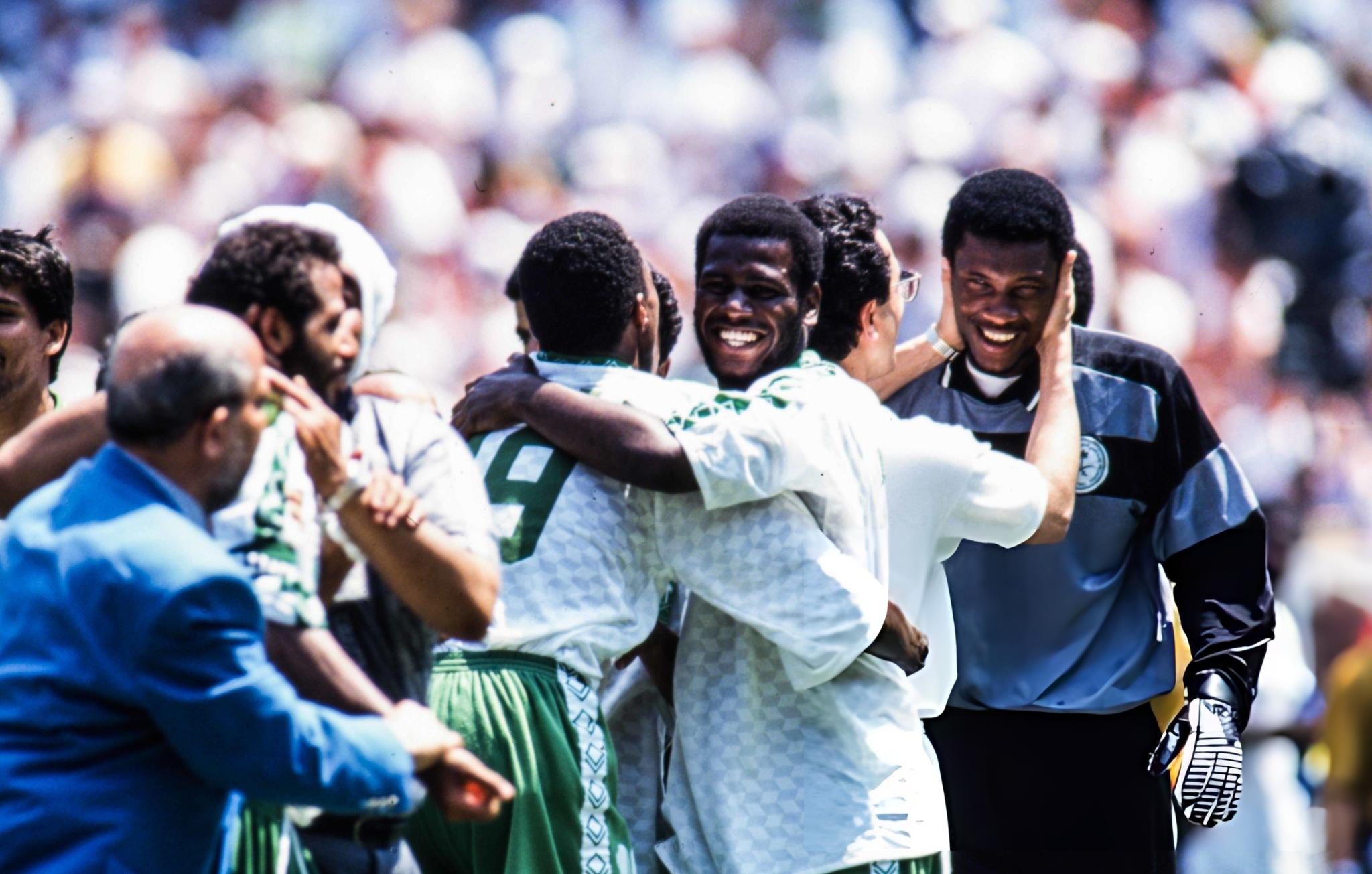
Majed Abdullah: Saudi Football’s First Superstar
Originally starting out in goal as a child, Majed Abdullah would eventually move to striker by chance, beginning in the position that would define the rest of his life. Majed started in Al-Nassr’s youth ranks, reached the senior team, and remained with the club until his retirement. Despite receiving several offers throughout his career, he showed immense loyalty to Al-Nassr, dedicating his playing career to the club and the Saudi national team.
Alongside his loyalty, Majed became known for his lethal goalscoring instinct, racking up 189 goals in 194 league games for Al-Nassr. Emerging in the late 1970s before Saudi football had many nationally recognized stars, his rise through the 1980s helped establish him as one of the Kingdom’s first true football superstars. He won numerous trophies with Al-Nassr and finished as the league’s top scorer six times.
With the Saudi national team, Majed played a major role in one of the Green Falcons’ most defining eras. He became the national team’s all-time leading scorer with 72 goals across 116 games. When Saudi Arabia won its first Asian Cup in 1984, Majed scored twice during the tournament, including in the final against China to help seal the historic title. Four years later, he helped the Kingdom win a second consecutive Asian Cup, scoring in the semi-final and converting his penalty in the final shootout.
Another defining moment came in 1994. Saudi Arabia qualified for the FIFA World Cup for the first time, and Majed captained a golden generation that went on to reach the round of 16. More than a decade after helping Saudi Arabia conquer Asia, he was still there as the Kingdom announced itself on football’s biggest stage. The Saudi star would retire not too long after in 1998, and since then he has become an important figure in football through TV commentary, ambassadorship, and more.
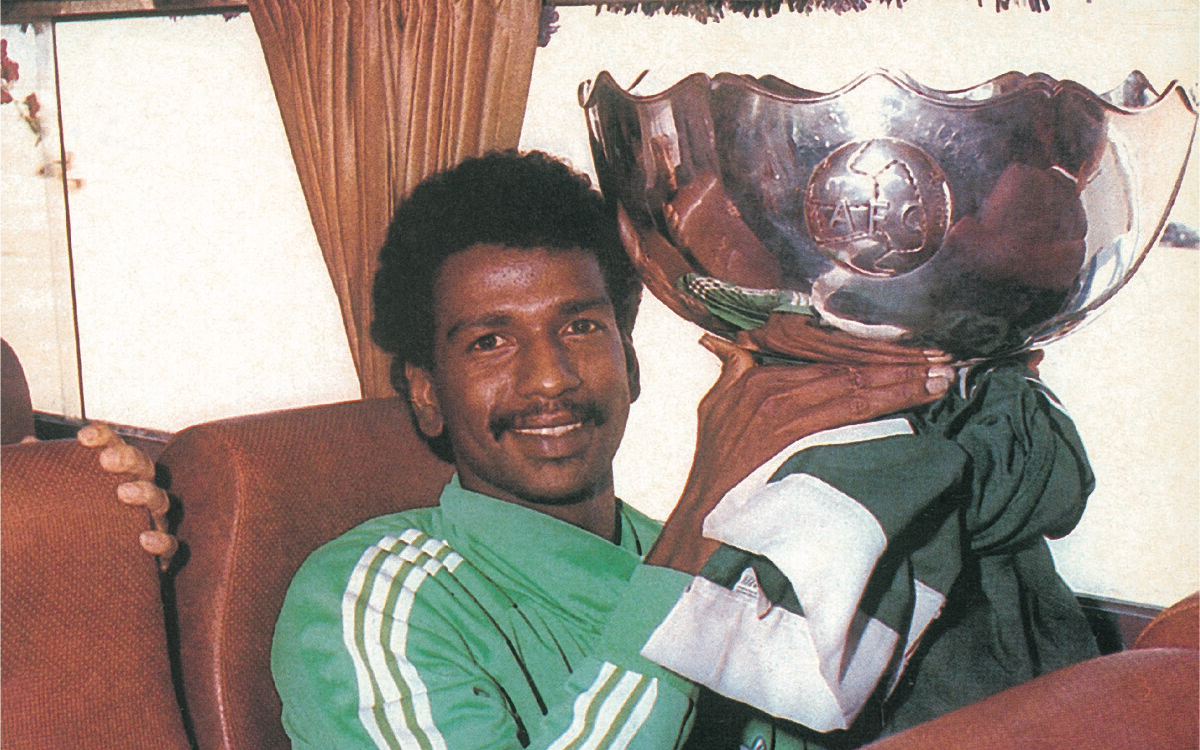
Sami Al-Jaber: The Face of a Generation
Sami Al-Jaber’s name became almost inseparable from Al-Hilal over the course of his career. Having come through the club’s youth system, he made his way into the first team at the end of the 1980s and went on to spend the next two decades representing the Riyadh side. Playing primarily as a striker, Sami was known for much more than simply scoring goals. His movement, intelligence, and ability to create chances made him an important part of Al-Hilal’s attack across several generations of the team.
His time at the club was filled with success, as he collected numerous domestic and continental trophies and twice finished as the Saudi league’s top scorer. Sami also had a brief experience abroad in 2000 when he joined Wolverhampton Wanderers on loan, becoming one of the earliest Saudi players to make the move to Europe and the first to play in English football.
His career with the Green Falcons followed a similar path of longevity and success. Sami scored 46 goals for Saudi Arabia and was part of the squad that won the Asian Cup in 1996, the Kingdom’s third continental title. More importantly, he belonged to the generation that changed Saudi Arabia’s place in international football. He featured at the national team’s first World Cup in 1994, where Saudi Arabia shocked many by reaching the round of 16, and remained an important figure long after many members of that generation had moved on.
That longevity became one of the most remarkable parts of Sami’s career. He appeared at four consecutive World Cups between 1994 and 2006, becoming the only Saudi player to play in four different editions of the tournament. Even more impressively, he scored in three of them. His first came against Morocco in 1994, followed by another against South Africa in 1998. Eight years later, at 33, Sami came off the bench against Tunisia and scored again, twelve years after his first World Cup goal. It was a fitting final chapter to an international career that stretched across different eras of Saudi football.
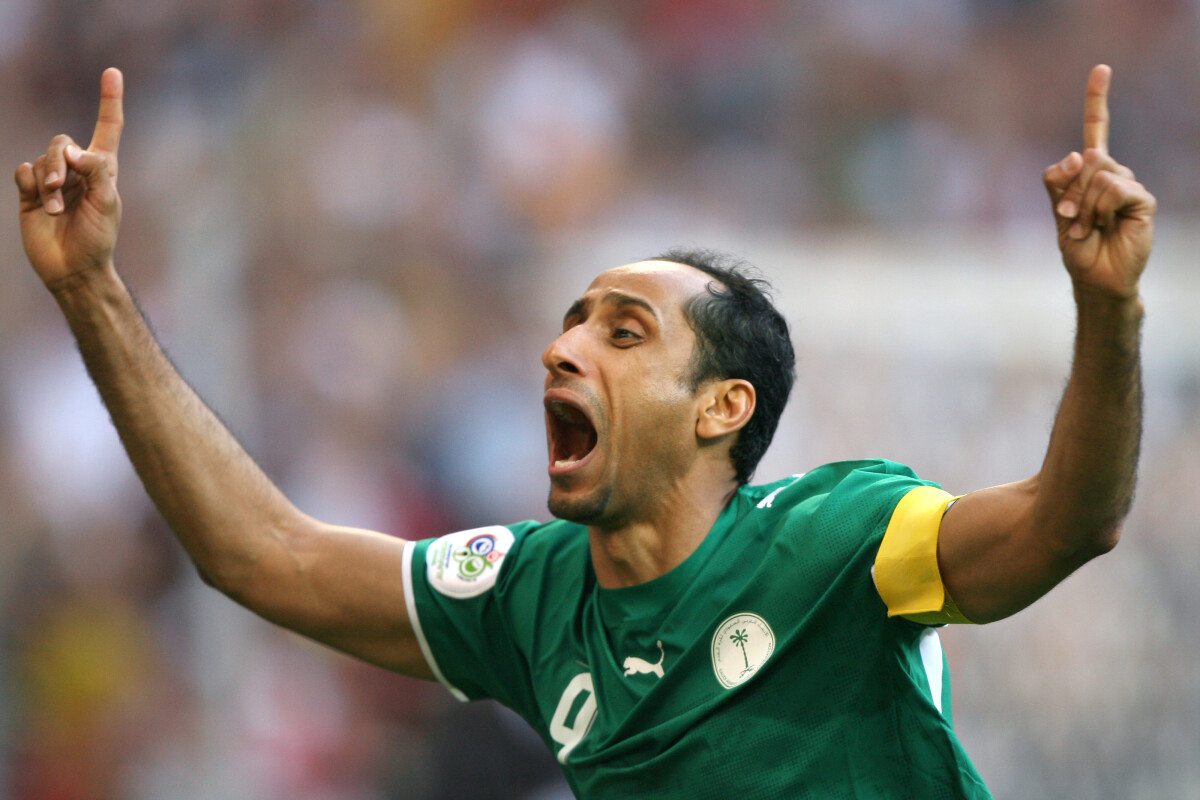
Mohammed Al-Deayea: Asia’s Goalkeeper of the Century
Before becoming one of the greatest goalkeepers in Asian football, Mohammed Al-Deayea was actually guarding a different kind of goal. Growing up in Hail, he began as a handball goalkeeper for Al-Tai at just eight years old, coming from a sporting family that included his older brother Abdullah, who was also a goalkeeper.
Mohammed eventually made the switch to football, and it did not take long for the decision to pay off. After joining Al-Tai’s youth team, Al-Deayea was selected for the Saudi U-16 national team and, in 1989, became a world champion when Saudi Arabia won the FIFA U-16 World Championship. He spent the first decade of his senior career with his hometown club before moving to Al-Hilal in 1999, where he added several domestic and continental trophies to his career.
Al-Deayea’s biggest legacy, however, was built in the Saudi goal. After joining the senior national team in 1993, he helped the Green Falcons qualify for their first World Cup the following year and started throughout their historic run to the round of 16. He remained Saudi Arabia’s first-choice goalkeeper through three consecutive World Cups, playing ten matches between 1994 and 2002.
One of his finest moments came at the 1996 Asian Cup. Saudi Arabia reached the final against hosts UAE, and after 120 goalless minutes, the title came down to penalties. Al-Deayea played his part in the 4–2 shootout victory that gave Saudi Arabia its third Asian Cup, finishing the tournament as its best goalkeeper.
By the end of his international career, Al-Deayea had built a reputation that extended far beyond Saudi football. He was long recognized as the most-capped male international footballer in the world, earning him the nickname “Dean of World Players.” He was also named Asia’s Goalkeeper of the Century, one of the biggest individual recognitions of his career. He continued with Al-Hilal until retiring in 2010, bringing an end to a career that showed the goalkeeper position was just as capable of producing a Saudi football icon as any goalscorer.
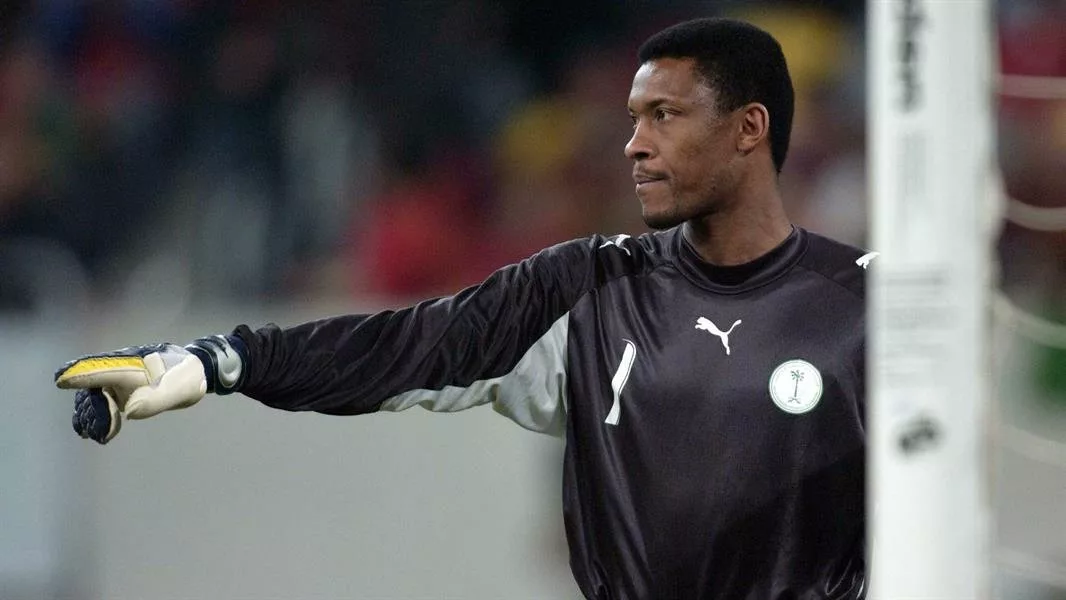
Yosuf Al-Thunayan: The Philosopher
Yousuf Al-Thunayan’s journey with Al-Hilal began in 1980, when he joined the club’s football school and was selected as one of only 50 players from around 200 children. He continued through the youth ranks until reaching the first team, and from there, Al-Hilal would remain the only club he represented throughout his career.
Yousuf was not the type of player remembered simply for the number of goals he scored. Playing mainly as an attacking midfielder and winger, it was his dribbling, creativity, and ability to find his way through defenders that made him stand out, eventually earning him the nickname “The Philosopher.” He was at the heart of an extremely successful period for Al-Hilal, winning league titles, King’s Cups, and several continental trophies.
His talent translated just as well to the Saudi national team. Yousuf was part of the side that won the 1988 Asian Cup, playing an important role in the tournament and setting up Majed Abdullah’s winning goal against Iran in the semi-final. Eight years later, he returned to the Asian Cup as one of the experienced leaders of the team and produced one of his most memorable performances against China in the quarter-final.
Saudi Arabia found themselves 2–0 down after only 16 minutes before Yousuf came off the bench and completely changed the game. He scored twice as the Green Falcons came back to win 4–3, eventually going on to lift their third Asian Cup title.
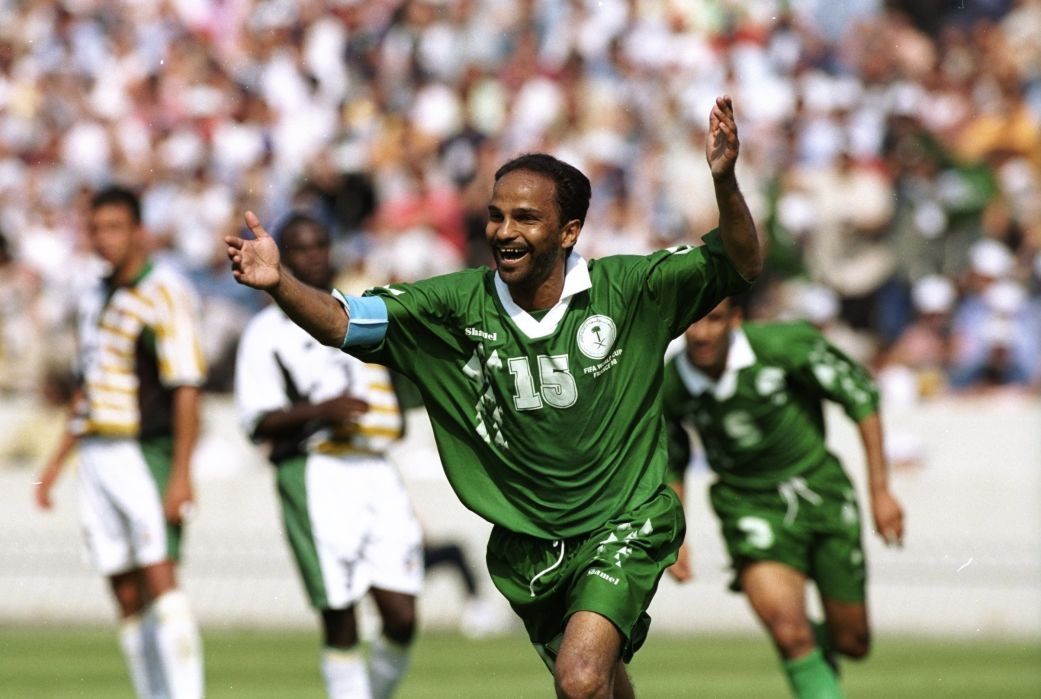
Despite being one of Saudi football’s biggest stars of the era, Yousuf missed the national team’s historic first World Cup appearance in 1994. His opportunity finally came four years later in France, when he was already 34. Against South Africa, Yousuf captained the Green Falcons and scored from the penalty spot to briefly put Saudi Arabia 2–1 ahead before the game eventually ended in a 2–2 draw.
It would be his only World Cup, but by then his place in Saudi football history had already been established. Yousuf continued playing for Al-Hilal into the early 2000s before stepping away from football, later receiving a farewell match against Valencia in front of more than 60,000 fans in Riyadh. For a player nicknamed “The Philosopher,” his legacy was fittingly never just about trophies or numbers; it was about the way he played and the kind of football that made people want to watch him.
The Generations That Built Saudi Football
Saudi football’s current transformation did not begin from zero. Long before the Kingdom welcomed some of the world’s biggest players and entered a new era on the global stage, Saudi football already had its own heroes.
Majed Abdullah gave a generation its superstar. Sami Al-Jaber carried Saudi football across four World Cups. Mohammed Al-Deayea showed that greatness could come from between the posts, while Yousuf Al-Thunayan gave supporters a style of football they would remember long after he stopped playing.
Their eras may have passed, but their influence remains part of Saudi football’s identity. As the Kingdom enters one of the most ambitious periods in its sporting history, remembering the players who helped build that identity is just as important as celebrating where Saudi football is going next.
Follow Riyada Hub for the wins, stories, and insights shaping the future of Saudi sports.


